The Beatles weren’t a band of brothers: Who’d have thought it?

If you want a book sympathizing with Paul McCartney as the guy who made the Beatles tick, and portraying George Harrison as a suspicious, less than grateful whiner, this is for you. 

Geoff Emerick, Here, There, and Everywhere: My Life Spent Recording the Music of the Beatles.

Posted in Review | Tagged , | 3 Comments

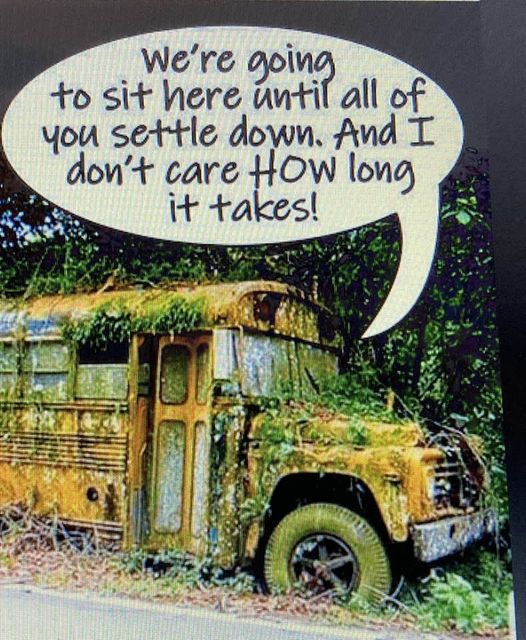
Empty threats gone wrong

Posted in education, Humour, Travel | Tagged , | Leave a comment

Anything for a laugh

50 Ridiculous Construction Fails That Actually Happened (sciencesensei.com)

Posted in Humour, Technology | Tagged , | Leave a comment

Billie Holiday: a genius that got lucky

“One day, we were so hungry we could barely breathe,” she told Downbeat magazine in 1939. “I started out the door. It was cold as all hell and I walked from 145th to 133rd down Seventh Avenue, going in every joint trying to find work. Finally, I got so desperate I stopped in the Log Cabin Club, run by Jerry Preston. I told him I wanted a drink. I didn’t have a dime. But I ordered gin (it was my first drink — I didn’t know gin from wine) and gulped it down. I asked Preston for a job … told him I was a dancer. He said to dance. I tried it. He said I stunk. I told him I could sing. He said sing. Over in the corner was an old guy playing a piano. He struck “Travelin’” and I sang. The customers stopped drinking. They turned around and watched. The pianist, Dick Wilson, swung into “Body and Soul.” Jeez, you should have seen those people — all of them started crying. Preston came over, shook his head and said, ‘Kid, you win.’ That’s how I got my start.”

Posted in Autobiography, History | Tagged , , | Leave a comment

Jose Mourinho’s wisdom

“Pressure? What pressure? Pressure is poor people in the world trying to feed their families. There is no pressure in football.”

Posted in Sport | Tagged , , | Leave a comment

Book Review: Richard Russo ~ Nobody’s Fool (1993)

Ordinary people are fascinating. That insight led to decades of success for Coronation Street and EastEnders. Likewise, Anthony Trollope’s 19th century Palliser series and John Updike’s Rabbit quartet of stunning novels.1 Russo taps into that truth. There’s virtually no sex, or violence. There are no gangsters, crooked politicians, sleaze. What’s there is is ordinary people living their lives. They have slabs of time where apparently nothing happens. Russo has created a community which is believable.

As with soup operas once a reader is committed to characters they want more. The magnetism of Russo’s novel is that his characters are compelling in a profound understanding of ‘ordinary’. His genius extends to a wry, sardonic tone, which pervades his characters. There’s chemistry between the characters.

Nobody’s Fool is the first of a trilogy and I’m hooked.

Try this

“Exactly which of your doctor’s instructions are you following these days,” Sully inquired. “All of them, “Carl said to the ceiling. “Everyone.”

“He advised you to drink and smoke and screw your brains loose?”

“Except those,” Carl grinned drunkenly.1

 Notes

1 For Trollope see Palliser novels – Wikipedia John Updike’s Rabbit series sets an Olympian standard. The series began in 1960 and about every ten years a new volume came out making four altogether. Russo is Updike’s heir.

2 Russo, Richard. Nobody’s Fool (p. 184). Atlantic Books. Kindle Edition.

Posted in Literature, Review | Tagged , , , | Leave a comment

A cute answer

Posted in Humour, photography | Tagged | Leave a comment

Cooking for Slackers: Almond pancakes

Pancakes are lovely but are a terrible faff to make. Messy; lots of opportunities for mistakes – too thick, too thin, too burned. The obvious solution is for a Slacker to go to Sainsbury and buy them. But their pancakes are a tasteless imitation of the real thing. That’s the conundrum! This recipe solves the dilemma. A tasty fuss free pancake.

Ingredients

6 pack of pancakes1

Flaked almonds2

Maple syrup3

NB each one of these items exceeds the price cap for the meal but then you keep them for another day. Unless you forget and throw them away, which makes the meal quite pricy.

Technique

Put a pancake on a plate and microwave for 55 seconds

Pool maple syrup and spread evenly across the pancake

Scatter almond flakes

Roll pancake into a cylinder

Repeat according to taste – 6 is probably too many but go for it if you feel you must.

Outcome

A Sainsbury’s pancake that’s eatable.

Finally

Just a plate and knife and fork to wash up, or leave for next time.

Notes

1 Sainsbury’s Sweet Pancakes x6 375g | Sainsbury’s (sainsburys.co.uk)

2 Sainsbury’s Almond Flakes 200g | Sainsbury’s (sainsburys.co.uk)

3 Sainsbury’s Canadian Pure Maple Syrup 250g | Sainsbury’s (sainsburys.co.uk)

Posted in cookery | Tagged , | Leave a comment

The birth of modern British politics, 1832-3

The birth of modern British politics began in 1832 when the Whig government intervened in property rights. Firstly, ownership of rotten boroughs, which elected MPs, and secondly, slavery. Ownership of constituencies and slaves were felt to be against the public good. Both pieces of legislation followed campaigns from pressure groups. This was especially true of the abolition of slavery. The Whig government passed The Reform Act, 1832, and The Abolition of Slavery Act, 1833. The first began the destruction of aristocratic power with the abolition of medieval constituencies. The second ended slavery, throughout the Empire, by buying every single one. These Acts changed the political world.

The Whig government benefited from political corruption.1 The Prime Minister and ten colleagues weren’t voted into office because they were aristocrats. Many owned constituencies and nominated MPs. The Reform Act, was political altruism. The Whigs forced it through both houses of parliament against opposition, which included many in their own party. All of Grey’s MPs, for example, came from unrepresentative historic constituencies.

Creating MPs for cities meant tiny boroughs were abolished. Grey also radically abolished obsolete election methods (see Addendum) The Act radically reoriented democracy in Britain. The equitable distribution of seats mattered for the first time.

The Abolition of Slavery Act, 1833, politicised moral considerations for the first time. Slavery had been vilified as ‘odious’ in 1772, by Lord Mansfield, who declared no-one in Britain could be a slave. Thousands of slaves, living with their owners, were released without compensation. Abolitionists promptly formed sophisticated pressure groups highlighting slavery as abhorrent. There were, however, important economic downsides to abolition. The Whig government knew that slavery affected many people in Britain. Most slave-owners never saw slaves because ownership was embedded within overseas investments.3 Income was generated by arms-length ownership. An elegant solution was concocted. The government bought slaves and released them.

… ’In 1833, Britain used 40% of its national budget to buy freedom for all slaves in the Empire. Britain borrowed such a large sum of money for the Slavery Abolition Act that it wasn’t paid off until 2014. This means that living British citizens helped pay for the ending of the slave trade with their taxes’.4

The notion that governments should do good was unknown until Lord Grey’s government abolished slavery. State intervention became part of the political narrative and future social legislation was predicated on a political ‘ought’. (The state can rectify social wrongs and therefore it ought to do so. The logic is flawed but the argument is politically compelling.)

The two years, 1832-3, began modern British politics. The Whig government initiated the destruction of aristocratic power and introduced interventionist social legislation. The use of legislation to shape society became central to British politics.

Addendum: How MPs were elected prior to 1832

  1. Boroughs in which freemen were electors;
  2. Boroughs in which the franchise was restricted to those paying scot and lot, a form of municipal taxation;
  3. Boroughs in which only the ownership of a burgageproperty qualified a person to vote;
  4. Boroughs in which only members of the corporation were electors (such boroughs were perhaps in every case “pocket boroughs“, because council members were usually “in the pocket” of a wealthy patron);
  5. Boroughs in which male householders were electors (these were usually known as “potwalloperboroughs”, as the usual definition of a householder was a person able to boil a pot on his/her own hearth);
  6. Boroughs in which freeholders of land had the right to vote.

Source: Reform Act 1832 – Wikipedia

Notes

1 Demography of England – Wikipedia In 1750 London had a population of 675,000. A hundred years later it was 2.8 million

2 Lord Grey’s cabinet of 1830 had eleven aristocrats in it including a duke. There were just two commoners, who were far from being ‘common’. Charles Grey, 2nd Earl Grey – Wikipedia

3 This is like people owning tobacco shares because they’re embedded in Unit Trusts. It’s probable they don’t know what they ‘own’ because they’re buried amongst 1000s of other shares.

3 FOI2018-00186_-_Slavery_Abolition_Act_1833_-_pdf_for_disclosure_log__003_.pdf (publishing.service.gov.uk) see How the first Black Community was formed in London after 1772 | Odeboyz’s Blog (oedeboyz.com)

Posted in History, Politics | Tagged , , | Leave a comment

Cooking is unnecessary

Posted in Uncategorized | Leave a comment