War Studies: The Importance of the Battle of Tsushima, Japan, 27-28 May 1905

Japan was humiliated by the USA in the mid-1850s.1 This introduced them to the brutal reality of global power. They vowed to modernise their military, making them equal to the western powers.2 The Royal Navy was the world’s largest and most effective fleet and the Japanese aimed at creating their version. They bought British built warships and their officers were trained by the Royal Navy.

Japan’s navy needed coal supplies but didn’t have any fossil fuel resources: Korea did. Japan embraced the European ‘template’ of Imperialism by colonising Korea in 1894. Simultaneously the Russians were exploding eastwards, also building an empire. They were a competitor for resources and territory. War was likely when Japanese and Russian interests clashed in the Far East. The first significant conflict was a land battle at Mukden, 1905.3 Russia’s defeat disabused Europeans about Japanese inferiority.

Mukden was a catastrophe but the naval battle of Tsushima, also in 1905, changed world history.

The Russian Baltic fleet sailed 18,000 miles to rescue their Pacific fleet at Port Arthur. They arrived too late and continued towards their base at Vladivostok. Before getting there they were intercepted.The Japanese were overwhelmingly superior, “All 11 Russian battleships were lost, out of which seven were sunk and four captured.”4

The Japanese had destroyed Russia’s Pacific and Baltic fleets. This was a pivotal in world history because every other major power faced impediments in their naval programmes. Britain was over-stretched and the USA was just beginning their shipbuilding. Germany and France were focused on Europe, leaving Japan controlling the Far East.

Tsushima happened  a century after Trafalgar. The Japanese were sensitive to this,

“Since the conclusion of the Anglo-Japanese Alliance in 1902, Britain had been Japan’s foremost ally and played a key role in its naval preparations before the war. And yet, the sudden [Japanese] public interest in Nelson was self-serving too, since the domestic media, much like the foreign press, hailed Tōgō as his true heir, thereby placing Japan and Britain on a similar footing.”5

For Togo to be spoken of as a new Nelson boosted Japanese self-esteem. It fuelled their image as a superpower. In the early 20th century being a superpower implied a colonial policy. They were enthusiastic about this. Korea was brought entirely under their thumb by 1910.6

The chaos of the First World War gave Japan an opportunity to ‘fight’ Germany by seizing their Far Eastern territories. They also began dismembering China.7

The battle of Tsushima turbo-charged Japan into full-blown militarism ultimately with disastrous consequences.

Notes

1 Perry Expedition – Wikipedia

2 For their army they used Germany and France as their model.

The importance of the battle of Mukden (1905) | Odeboyz’s Blog

4 Battle of Tsushima – Wikipedia

5 Time to Remember, Time to Forget: The Battle of Tsushima in Japanese Collective Memory since 1905 – The Asia-Pacific Journal: Japan Focus

6 Japan–Korea Treaty of 1910 – Wikipedia

7 Twenty-One Demands – Wikipedia

Posted in History, War | Tagged , , , | Leave a comment

A stolen punchline

Posted in Humour, quips, Science | Tagged | Leave a comment

Jesus ‘for hire’ in Utah

“Models who look like Jesus are in demand in Utah…because people like to hire Jesus look-alikes for family portraits and wedding announcements. Men who work for the Church of Latter-Day Saints are required to shave daily and keep their hair short, so there’s a demand for models with shoulder-length hair and beards…I always warn families that if your kid doesn’t like taking pictures on Santa’s lap, he probably won’t like the Jesus experience either.”

Funny Old World Private Eye 24th January 2025 p25

Posted in Religion | Tagged , , | Leave a comment

Book Review: Lee Child ~ The Visitor (2000)

Reacher novels mainline on ‘Smash, Bang, Wallop’. The Visitor is subtle, nuanced and very, very clever. It is the fourth novel in this book-a-year series and appeared before Lee Child transitioned into formulaic sado-porn. There are only two examples of what would become characteristic mega-violence. And by the standards of later novels that is hardly trying.

The driving force is the plot. The most subtle of subtle of serial killings driven by the oldest of motives: jealousy, money and entitlement. The perpetrator however knows how to conceal the motivation. This plot twist is so clever that a plot-spoiler would be cruel and heartless. Which I’m not.

I read the 510 pages in a day. So, yes it is a page turner. And a big shout out for physical books. I bought this after a casual visit to a charity shop and was richly rewarded. They got £2 making ‘Joy and Happiness’ all round.

Posted in Literature, Review | Tagged , | Leave a comment

Anyone you know?

Posted in Humour | Tagged | Leave a comment

A Ryanair pub

Jim went into a pub and ordered a pint of Guinness.

“That’ll be a euro.” Said the smiling bartender.

“Wow, that’s cheap!”

“We always beat the competition on price.”

“Cheers.”

“I see you don’t have a glass.”

“That’s true.”

“Would you be wanting one of ours? It’s €4 and then €4 an hour.”

Posted in Humour | Tagged | Leave a comment

Film Review: A complete Unknown (2025) ~ (Timothee Chamalet)

A Complete Unknown is the worst Dylan biopic I’ve seen.1 It’s a Memory Lane sing-a -long. And the plot/narrative? Negligible. Quite how Dylan’s story can be emptied into a series of brooding scenes is beyond me.

Elle Fanning (Sylvie Russo)2 is a terrific actor and the director had her play Russo as a dead eyed dumb blond. Except Sylvie Russo, aka Suze Rotolo, wasn’t a dumb blond. She was a vivacious intelligent woman important to Dylan in his magical early years.

[Dylan] wrote multiple songs about Rotolo’s leaving, including “Boots of Spanish Leather.”3

The films treatment of Pete Seegar is a travesty. He’s portrayed as a hollowed-out pantomime figure strumming a banjo.

In a nutshell Dylan is, apparently, an idiot savant spending every moment playing a guitar and composing. Everyone around Dylan is a ghost drifting aimlessly.

The transition to electric created an American version of the Stravinsky, Rites of Spring, Parisian riots of 1913. Except they were tame. And Dylan, unlike Stravinsky, threw red meat to the crowd with a ‘greatest hits’ tune.

If you are a child of the 60s and a Dylan fan this is essential viewing….. Otherwise?

Notes

1The documentary No Direction Home, 2005 is very good. No Direction Home – Wikipedia

For a very superior film try I’m Not There, 2007. Cate Blanchett is unbelievably good in this film cate blanchett plays bob dylan – Search

My 60th anniversary critique of Blowin’ in the Wind is still OK. Song Review: Blowin’ in the Wind (Dylan) 60th Anniversary (1962-2022) | Odeboyz’s Blog

2 Sylvie Russo is a fictional name for Dylan’s girlfriend Suze Roloto Who Was Bob Dylan’s Girlfriend Suze Rotolo? The Person Who Inspired Sylvie Russo

3 loc.cit.

Posted in Autobiography, Film, Poetry | Tagged , | Leave a comment

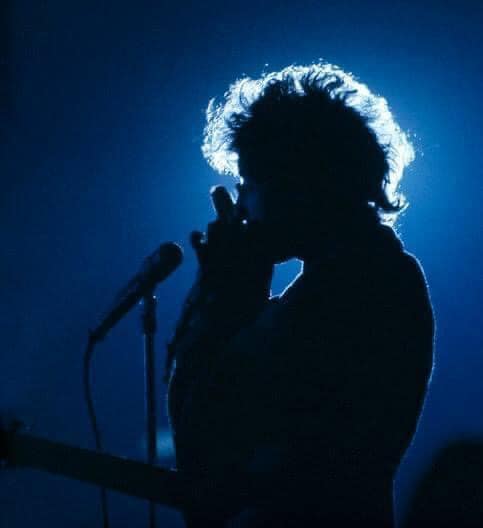
The Greatest Dylan Photo

Posted in photography | Tagged | Leave a comment

The Cost-of-Living Crisis: Designer Chocolate

“My current favourite is Rozsavolgyl Csokolade – Sur Del Largo, £9:95/70gr, Venezuelan beans, made in Hungary; this bar is ‘beautifully balanced’ – the notes say so and I agree. Very classy, so tasty and elegantly wrapped.”

Annalisa Barbieri Observer Magazine 5th January 2024

Posted in cookery, Economics, Health | Tagged , | Leave a comment

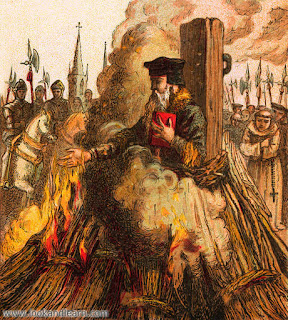
The Execution of Archbishop Cranmer, 1556

The Apostles’ Creed

I believe in the Holy Spirit, the holy catholic Church, the communion of saints, the forgiveness of sins, the resurrection of the body, and the life everlasting. Amen1

The Church guides believers to Heaven.2 This satisfied everyone until Cranmer’s Reformation3 destroyed religious certainties. He ended the rule of the Roman Catholic Church in England by introducing a new format for worship. Those who resisted Cranmer’s reforms paid with their lives. In 1553, Queen Mary, a devout Catholic, committed herself to undoing his reforms. Cranmer had made it possible for Henry VIII to divorce her mother. The consequence for Mary was that she lost her position as a princess and, even worse, was in mortal peril for 20 years.

Cranmer was the principal force behind the English Reformation: When Mary was crowned queen after the death of her brother, she seized her opportunity. Cranmer had to pay the ultimate price for destroying the Roman Catholic Church in England. Her theology was fuelled by hatred of Cranmer. Her mother’s divorce meant she lost her coveted status as a princess because she was now ‘illegitimate’. After this she lived as a prisoner at the mercy of Henry VIII. Cranmer’s execution was a certainty. But ‘hope springs eternal’ and he prostrated himself and repudiated his reforms. For anyone else this would have saved his life but he was Cranmer. Mary was implacable. He could do, and say, absolutely nothing to rescue himself. He was doomed.

Cranmer faced a dreadful dilemma on the 20th March 1556. On the following day he had to attend the University Church, Oxford to deliver a further recantation of his Protestant faith. He’d already done so five times previously and it hadn’t been accepted. He finally appreciated there was nothing he could do that would save him from Mary’s wrath. He was going to go to the stake on the 21st March and so his final reckoning with God was 24 hours away. His calculation was that the savage death he would suffer was nothing in comparison to angering God. Cranmer decided that the excruciating agony of being burned at the stake was a lesser punishment than eternal damnation. He shocked those who were in the church by rebutting his denials of adherence to the Protestant faith. He went further and condemned the Papacy,

And as for the Pope, I refuse him as Christ’s enemy, and antichrist, with all his false doctrine.4

Cranmer had previously betrayed his principles and nothing could conceal the self-serving nature of his recantation. Mary was correct,

[She] was unwilling to believe that the submission was sincere, and he was ordered to be burned at Oxford on 21 March 1556. At the very end, he repudiated his final letter of submission, and announced that he died a Protestant. He said, “I have sinned, in that I signed with my hand what I did not believe with my heart. When the flames are lit, this hand shall be the first to burn.” And when the fire was lit around his feet, he leaned forward and held his right hand in the fire until it was charred to a stump.5

Cranmer’s execution is lauded by Protestants but it had many squalid features. Only his ringing statement on 21st March 1556 is praiseworthy. The back story to that statement shows a man full of doubts, fear and cowardice. He was a political archbishop and his death became part of the political narrative of Protestantism.

Notes

1 The Apostles’ Creed, 1549, is said in Church of England services as a statement of the ultimate principles of faith. Cranmer wrote this in English in the transition from the Latin Roman Catholic services. This is a key part of the Reformation.

2 Calvinists don’t believe this. They believe in ‘predestination’ where God’s ‘chosen ones’ will enter Heaven regardless of their behaviour. What Is Calvinism? A Simple Explanation of Its Terms, History & Tenets

3 For a quick summary see Reformation – Wikipedia

4 The Unlawful Execution of Thomas Cranmer – 21 March 1556 – The Anne Boleyn Files This quote is from his speech at the church

5 Hugh Latimer & Nicholas Ridley Cranmer had to watch as his fellow bishops Latimer and Ridley were burned at the stake in October 1555

Posted in History, Politics, Religion | Tagged , , , | Leave a comment