
The giant African land snail has a voracious appetite, eating over 500 types of plants and sometimes even consuming plaster and stucco, putting structures at risk. The snails can produce 1,200 eggs in a year and grow up to about the size of a human fist.
They can also carry rat lungworm, which causes meningitis in humans.1
Unintended consequences change the world. This is especially true when a habitat hasn’t any defences. Rhododendron bushes in Britain have destroyed wildlife and natural species of bush, grass and trees.2 Likewise, rabbits in Australia.3 This is well known but the exotic flora and fauna trade are motivated by today’s profit not tomorrow’s environmental catastrophe.
Florida is notorious for invasive species. Some of them look, and are, fearsome. The giant African land snail doesn’t appear to be as hazardous as the Burmese python.4
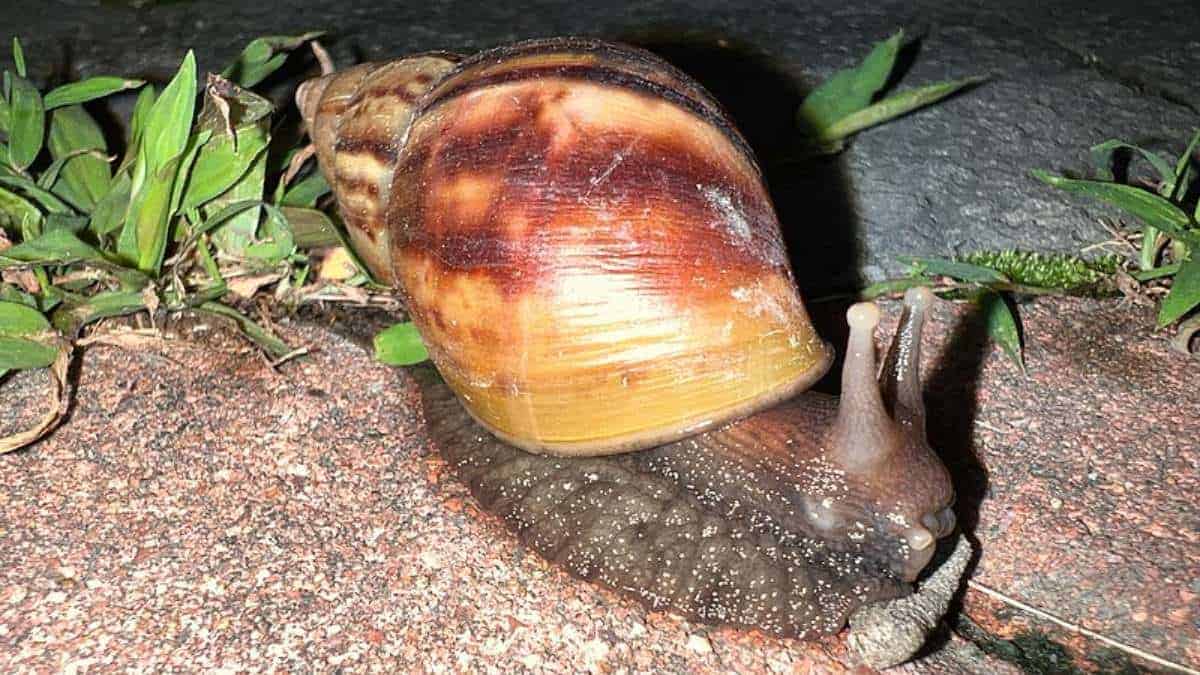
They are ferocious in their appetite, “To obtain the necessary calcium for their shells, these creatures also consume stones, sand, bones, and even concrete.”5 They destroy agriculture and are a hazard in many other ways. Their shells are very strong and can shred a car tyre for example if they are run over.
Florida has spent millions of dollars containing them. But the most recent infestation was cause by three illegally imported snails, which then bred uncontrollably.
Notes
1 Giant Snails Take Over Part of Florida—Again
2 Rhododendron is destroying our native wildlife – Woodland Trust
3 Invasive Species Council blames government for booming rabbit numbers – ABC News
4 The Burmese Pythons of Florida | Odeboyz’s Blog
5 Giant Snails in Florida (Eradicated Twice!) – Wildlife Informer


 Odeboyz's Blog