
In March 1945 the USA bombed Tokyo. They used incendiary bombs on a wooden city purposefully creating an inferno. The Japanese didn’t surrender. In August ‘A’ bombs were dropped on Hiroshima and Nagasaki. The Pacific War ended shortly afterwards.
“Bombs dropped from 279 Boeing B-29 Superfortress heavy bombers burned out much of eastern Tokyo. More than 90,000 and possibly over 100,000 Japanese people were killed, mostly civilians, and one million were left homeless, making it the most destructive single air attack in human history.”1 (my emphasis)
The ‘A’ bombing of Hiroshima and Nagasaki, “…killed between 150,000 and 246,000 people, most of whom were civilians…”2
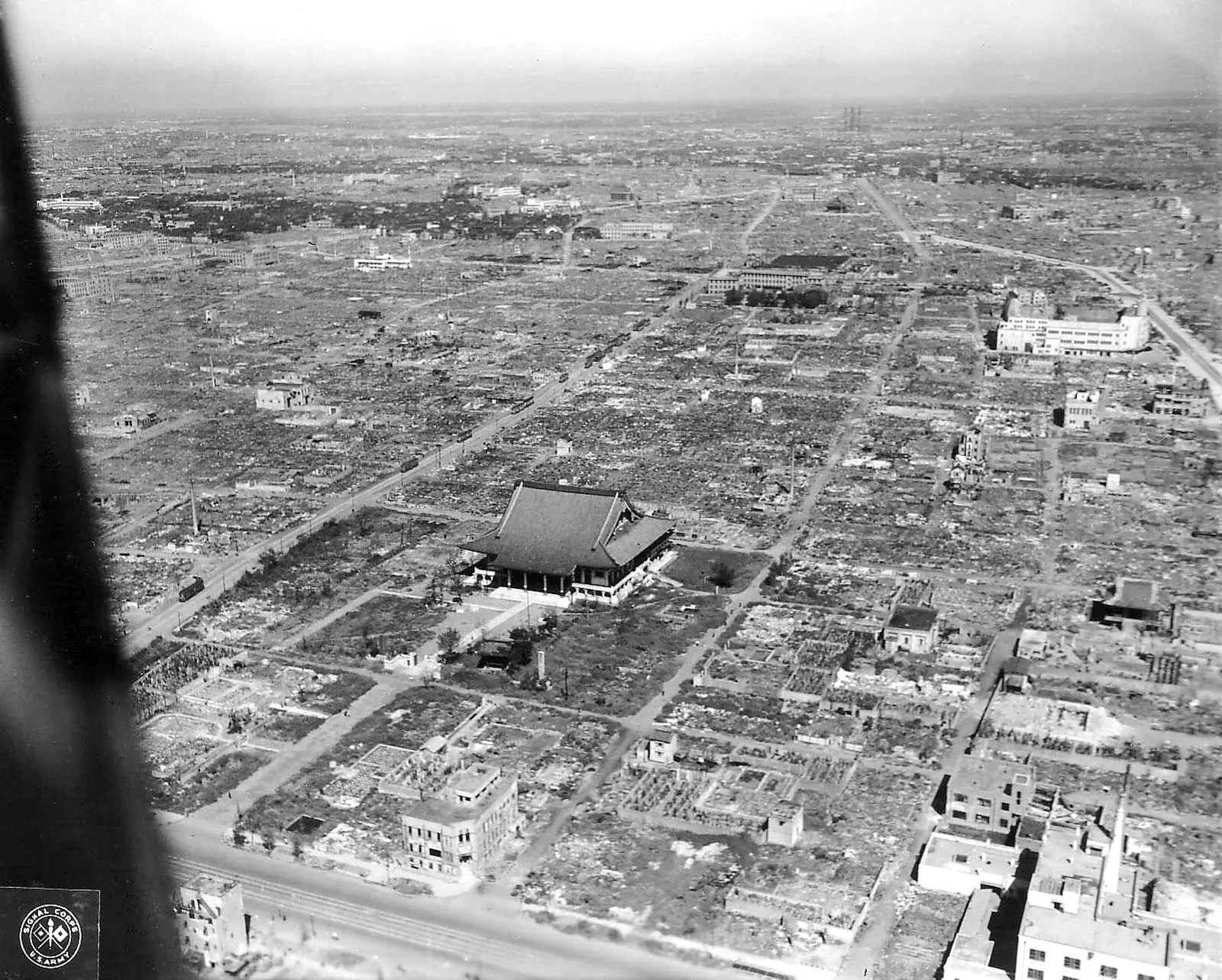
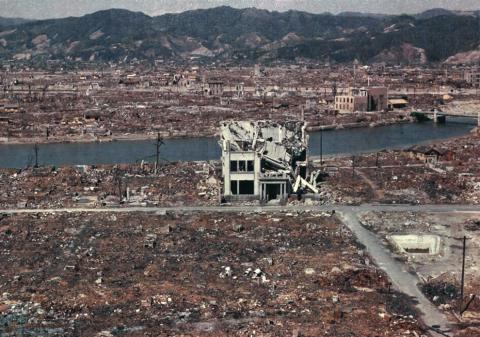
The photos below are of Tokyo and Hiroshima after being bombed. The destruction is identical, Why didn’t bombing Tokyo end the war but that of Hiroshima and Nagasaki did?
Tokyo, March 1945
Hiroshima, August 1945
Obliterating Tokyo through conventional bombing was, ‘normal’, unlike ‘A’ bombing. The Japanese didn’t understand what had happened at Hiroshima. It was incomprehensible to them that one bomb could obliterate a city. It was the ultimate terror weapon of mass destruction. The government was psychologically shattered and saw no option but to surrender. This occurred a few days later.
The novelty of ‘A’ bombs made the psychological difference. The USA’s victory wasn’t because of the destruction of Hiroshima and Nagasaki. Bombing remained a strategic failure.
Notes
1 Bombing of Tokyo (10 March 1945) – Wikipedia
2 Atomic bombings of Hiroshima and Nagasaki – Wikipedia The power figure of 150,000 is generally accepted nowadays with huge numbers injured. Bombing of Hiroshima and Nagasaki ‑ Causes, Impact & Lives Lost | HISTORY
Mission Statement: Concise critiques of major military events


 Odeboyz's Blog